Doypack with zip-lock: when you need it
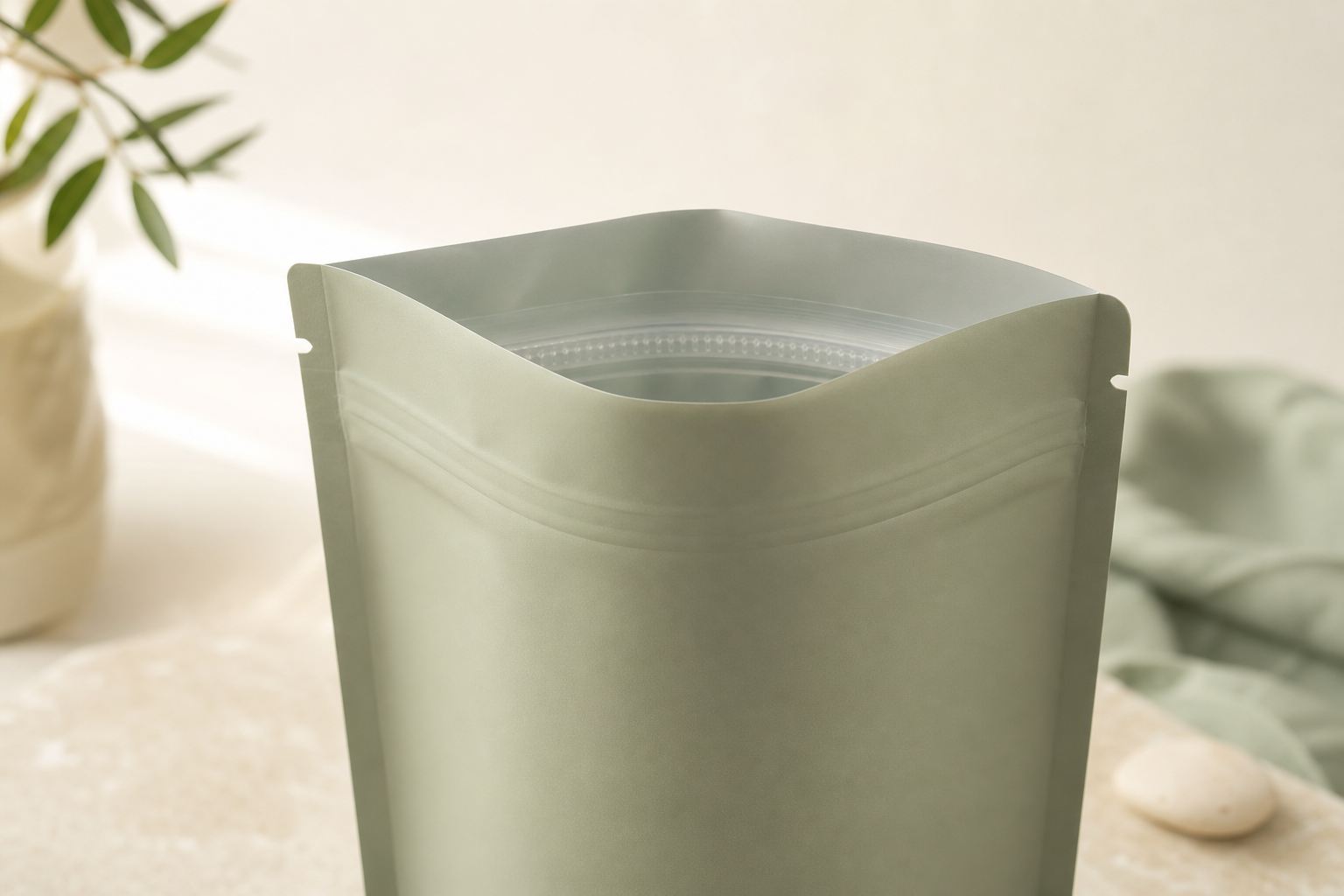
A zip-lock on a doypack is a closure that lets you open and reclose the pouch many times, keeping the product fresh between uses. It earns its keep whenever the contents are eaten in portions: snacks, coffee, cereals, pet food. Below we walk through the types of closures, who really benefits and when you can safely skip a zip-lock.
A zip-lock gives a doypack reclosability and longer freshness. There are three main types: press-to-close (press and seal), a slider with a runner, and child-resistant with protection against children. The closure raises the cost slightly, but it pays off in convenience. For single-serve portions and sachets, though, it is simply unnecessary. Minimum order from 5,000 pcs, design development is free.
What a zip-lock gives a doypack
The main job of a zip-lock is repeated hermetic reclosing. Once the pouch has been opened, the buyer can seal it tightly again: the product does not spill, does not soak up moisture or foreign odors, and loses its aroma more slowly. For goods that are not finished in one go, that feeds straight into buyer satisfaction and whether they come back for another pack.
There is a second side to it, too: a zip-lock works for brand perception. The pouch looks finished and practical, and it is easy to keep in a cupboard or on the kitchen counter. That leaves a sense of care for the customer, even when the product inside is perfectly ordinary.
Types of zip-locks: press-to-close, slider, child-resistant
Closures differ by the way they seal and by the level of protection:
| Press-to-close | Classic closure sealed by pressing with fingers. The most common and least expensive |
| Slider | A runner that slides along the closure. Maximum convenience, perceived as premium |
| Child-resistant | Protection against opening by children for hazardous products: household chemicals and certain goods |
| Powder-tight | A closure with higher tightness for fine powders and dry products |
The product and the budget usually make the choice for you. For most food goods press-to-close is plenty, while a slider comes into play when maximum convenience and shelf status take priority.
Which products need a zip-lock
- Coffee and tea: the aroma lasts longer when the pouch is sealed tightly between brews.
- Snacks and nuts: they are eaten in portions over several days.
- Pet food: large pouches are opened many times, so freshness is critical.
- Cereals, dry mixes, spices: a zip-lock keeps out moisture and insects.
- Frozen products: easy to take out a portion and reclose the rest.
How a zip-lock affects cost and production
The closure means an extra material and a separate welding operation, so it does nudge the pouch cost up. For most products, though, the difference is minor and is more than repaid by convenience and stronger brand perception. At the quoting stage we will show the price with and without a zip-lock, so you can weigh the effect yourself. We settle the closure type and pouch width in advance, since they affect compatibility with your filling line. Standard production time is from 7 to 14 days, printing from 1 to 9 colors, and design development is free.
When a zip-lock is not needed
At the same time, there are cases where the closure only adds cost without any real benefit:
- Single-serve portions: sachets, stick packs and portion doypacks that are opened and consumed at once.
- Products for a filling machine: where the equipment, not the buyer, does the closing.
- Promos and samples: small one-time volumes.
- Maximum savings: when the whole point is to lower the packaging price and the product is finished in one go anyway.
Choosing a doypack with a zip-lock?
We will suggest the closure type for your product and filling and calculate the run. Design development is free.