How much packaging production costs
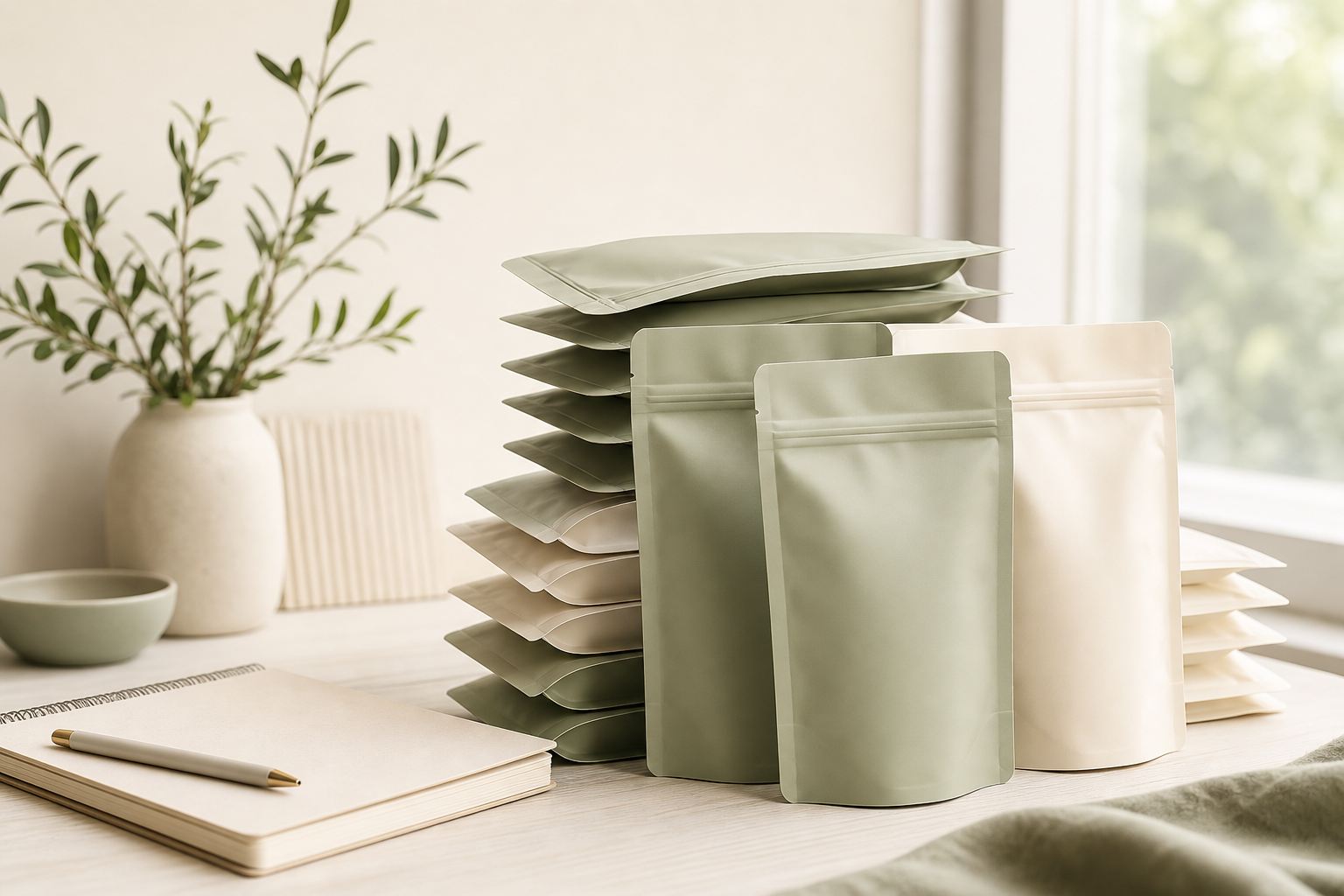
"How much does packaging cost?" It sounds like a simple question, yet there is no exact answer without your parameters. The price is built from several factors, and almost every one can be tuned to your budget. Let's break down what exactly drives the cost, why the per-unit price drops as the run grows, and how to get an accurate quote fast.
The cost of flexible packaging comes down to the material and number of layers, size, number of colors, run size, options (zip, valve, spout) and printing technology. The larger the batch, the lower the price per unit, since setup costs are spread across the whole run. The minimum order at Matrix Pack is from 5,000 pcs, design development is free, and the exact figure comes from a quote based on your specifications.
What the price of packaging depends on
Flexible packaging has no single "price per piece", because every order is one of a kind. The very same doypack can cost several times more or less depending on the material, size and run size. Let's walk through the main factors that shape the final cost.
| Material and layers | The number of film layers and the presence of a barrier, foil or metallization directly affect the raw material price. |
| Size and weight | A larger pouch needs more film, so the cost grows with area and thickness. |
| Number of colors | Printing from 1 to 9 colors: more colors mean more inks and more complex setup. |
| Run size | The larger the batch, the lower the price per piece, because preparation costs are spread across the whole volume. |
| Options | A zip lock, degassing valve, spout, euro slot, matte or gloss finish add to the cost. |
| Printing technology | Rotogravure, flexo or offset are selected to match the run size and color count. |
Why the per-unit price drops with volume
The reason is simple: a large share of packaging production costs is one-off and has nothing to do with the number of pouches. It covers preparing the artwork, making printing plates, setting up the equipment and calibrating color. Order 5,000 pouches and these costs split across 5,000 units. Order 50,000 and the same money spreads across 50,000, so each piece comes out noticeably cheaper.
Add to that the buying effect: the more film and ink you order, the better the terms on them. That is exactly why manufacturers work out several run-size options at once, so you can see for yourself how the price per unit shifts at different volumes.
How to reduce the cost of packaging
- Increase the run size. The simplest way to bring down the per-unit price once you are confident in the design and your sales.
- Optimize the color count. A well-judged design in 2 to 4 colors often looks no worse than a full-color one, yet costs less.
- Match the material to the task. Foil is not always a must: for many products a transparent or metallized barrier does the job.
- Combine items. Several flavors or sizes in one order share the savings on preparation.
- Standardize the size. Typical formats save time on production setup.
Why a quote needs your specifications
To quote an honest price, the manufacturer needs specifics: what product you are packing, the pouch size and weight, the type of material and barrier, how many print colors, the run size you want and the list of options. Without these details, any "price" stays a rough guess, and usually an inaccurate one.
At Matrix Pack the quote is free, and we handle the design development. You send the parameters, we prepare a commercial offer with several run-size options so you see at once how volume pulls the price. Lead time after approval is usually 7 to 14 days, and for printing the terms apply from 100 kg or 10,000 pouches, from 1 to 9 colors.
Need a quote for your packaging?
Send us the parameters and we will prepare a free offer with several run-size options.