What is barrier packaging and why it matters
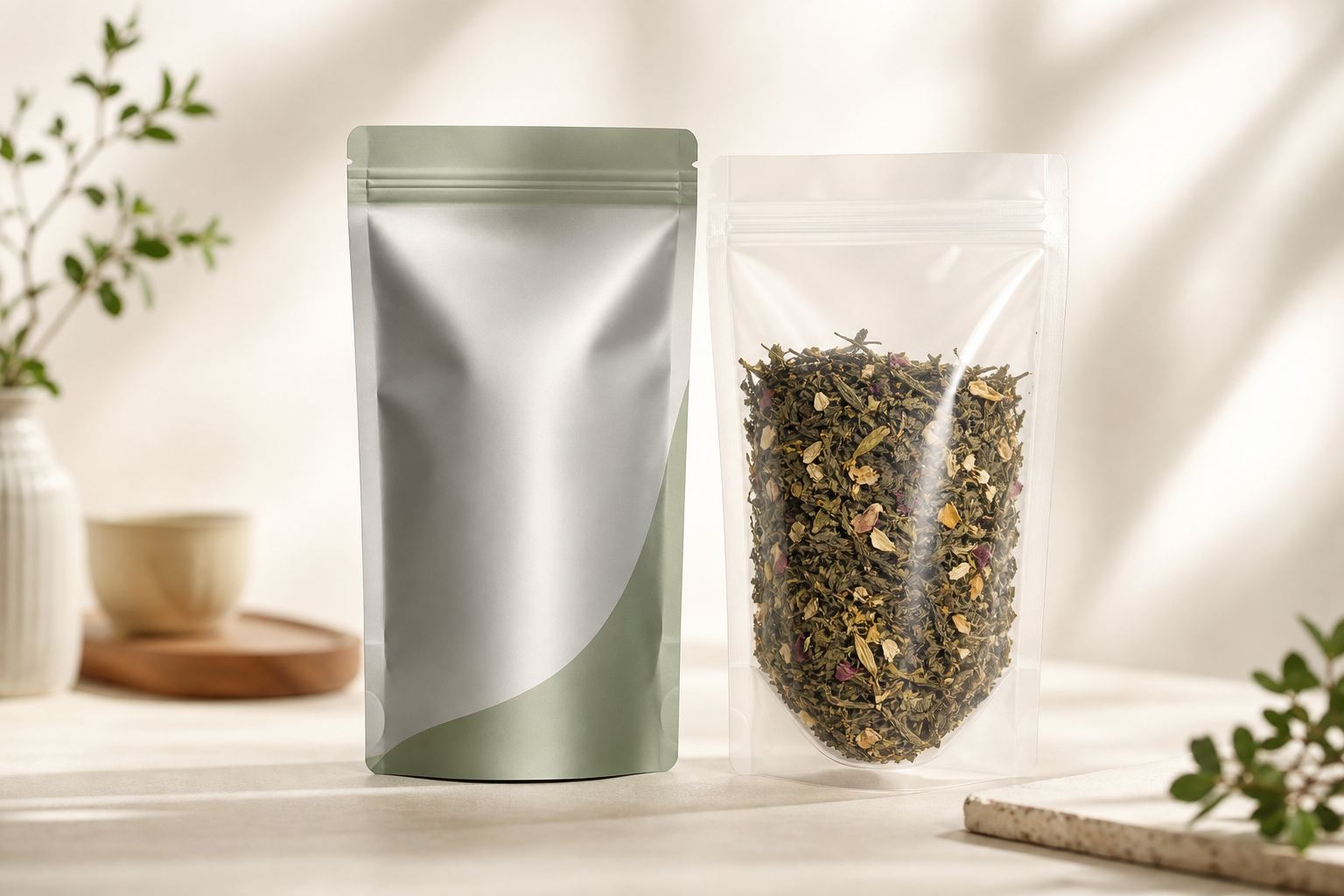
You will often spot the term "barrier packaging" in specifications, yet the idea behind it is refreshingly simple: keep out whatever spoils the product. Let's unpack what a barrier actually blocks, what the OTR and WVTR numbers really mean, how aluminum, metallization and transparent barriers differ, and how all of it plays into shelf life.
Barrier packaging limits how much oxygen, moisture, light and aroma can reach the product. Its strength comes down to two numbers, OTR (oxygen transmission) and WVTR (water vapor transmission): the lower they run, the better the protection. Aluminum gives the strongest barrier, metallization a touch less, and transparent EVOH keeps the product on show. Get the barrier right and you multiply shelf life.
What a barrier is and what it blocks
At its core, a barrier is the packaging's ability to stop certain substances from passing in or out. Products, after all, do not spoil on their own; they spoil under the influence of their surroundings, and barrier packaging cuts off exactly those factors:
- Oxygen the main enemy of fats, coffee and nuts: it triggers oxidation, rancidity and loss of flavor.
- Moisture turns dry products damp and, the other way round, dries out wet ones; it also drives caking and mold growth.
- Light destroys vitamins, dyes and fats, changing color and taste.
- Aromas a good barrier holds the product's own aroma inside and keeps foreign odors out.
Without a barrier, even a quality product loses its shelf appeal fast. With the right one, that same product stays fresh for months.
OTR and WVTR in plain words
To compare packaging objectively, the industry leans on two values. Do not let the acronyms put you off, the idea behind them is simple.
- OTR (Oxygen Transmission Rate) tells you how fast oxygen passes through the film per day per square meter. The lower the value, the less oxygen reaches the product.
- WVTR (Water Vapor Transmission Rate) is the same idea for water vapor: how much moisture passes through the material. A low WVTR means the product will not get damp or dry out.
A simple rule of thumb: coffee and dry, long shelf life products need low OTR and WVTR, which means a strong barrier. For something that will be eaten within a few days, a high barrier is usually overkill.
Types of barrier: aluminum, metallization, transparent
The barrier is created not by the whole package but by a specific layer inside the laminate. There are three main options:
| Aluminum foil (AL) | Highest barrier, fully blocks light, oxygen and moisture. For coffee, retort pouches and the longest shelf life products |
| Metallization (MET-PET) | A thin layer of metal on the film. Barrier slightly lower than foil, but cheaper, more flexible and prints well |
| Transparent barrier (EVOH) | A polymer layer with a high oxygen barrier without losing clarity. For when showing the product to the buyer matters |
Choosing between them always comes down to a trade-off between protection, cost, appearance and recyclability. Foil gives the maximum, metallization the golden mean, and EVOH transparency plus a solid oxygen barrier.
How the barrier affects shelf life
Shelf life depends directly on how much oxygen and moisture reach the product over time. Strengthen the barrier and you can stretch coffee freshness from a few weeks to 12 months or more, or keep a ready meal in a retort pouch good for up to 24 months without preservatives. So a barrier is far more than a technical detail: it feeds straight into logistics, returns and brand reputation.
Which products need a high barrier
- Coffee and tea highly sensitive to oxygen, light and aroma loss.
- Nuts, snacks, chips their fats oxidize fast.
- Spices and dry mixes vulnerable to moisture and aroma escape.
- Ready meals and pet food retort pouches with an AL barrier and RCPP material that withstands a 121°C autoclave.
- Supplements, confectionery, frozen goods depending on sensitivity to moisture and light.
At Matrix Pack we match the barrier to the specific product: we work with foil, metallization and transparent structures, layer thickness from 25 to 200 microns with a tolerance of plus or minus 5 microns. Minimum order from 5,000 pcs, and we deliver across Ukraine.
Need packaging with a reliable barrier?
We'll select the structure for your product and the shelf life you need. The quote is free.