Degassing valve on coffee packaging: why it matters
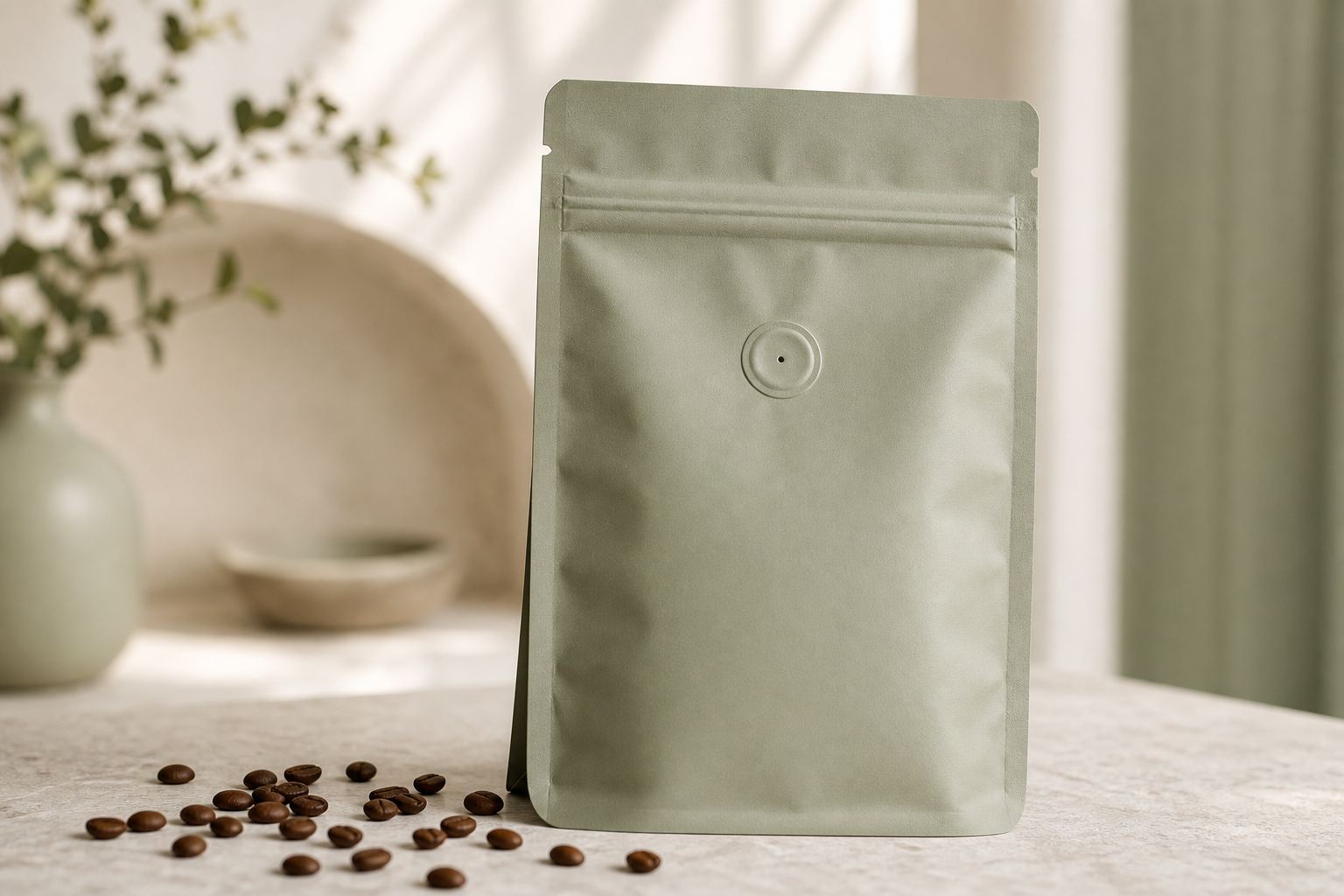
The small plastic disc on a coffee bag is easy to mistake for decoration. In reality it is a technical part that decides how fresh your coffee tastes. Here is why a degassing valve matters, how it works, and whether you need it for whole beans and ground coffee.
Fresh roasted coffee releases carbon dioxide (CO2). A one-way degassing valve lets that gas out and keeps oxygen from getting in. The bag does not inflate, the aroma is preserved, and you can pack coffee right after roasting without long resting.
Why fresh roasted coffee releases gas
During roasting, chemical reactions inside the beans generate a great deal of carbon dioxide. Once the beans leave the roaster, the coffee keeps giving off that gas for several days, and sometimes weeks. This process is what we call degassing, or the coffee "resting".
Pack freshly roasted coffee into an ordinary airtight bag and the gas simply has nowhere to go: the bag swells like a pillow, and in the worst case the seal splits. That is exactly why you need a way to let CO2 out while keeping air from getting in.
What a one-way degassing valve does
The degassing valve, also called an aroma valve, works in one direction only. Inside sits an elastic membrane coated with a thin layer of silicone oil. When the gas pressure inside the bag climbs above the pressure outside, the membrane opens a touch and releases the excess CO2. The moment the pressure evens out, the valve seals shut and keeps oxygen, moisture and outside odours away from the coffee.
In simple terms: gas goes out, air does not come in. This is the main reason the valve became a standard for quality coffee packaging.
Why the valve matters: aroma and oxygen protection
The main enemy of coffee is, unsurprisingly, oxygen. It oxidizes the aromatic oils, and the drink quickly loses flavour, turning flat and "cardboard-like". The valve, in turn, solves several problems at once:
- Protection from oxidation. Oxygen does not get inside, so the aroma lasts longer.
- Packing without resting. Coffee can be packed straight from the roaster instead of waiting for it to release gas.
- Bag integrity. The package does not inflate or burst at the seal during storage and transport.
- Freshness test. A customer can press the bag and smell the aroma through the valve, which works as a small freshness demo.
Packing without resting the coffee
Without a valve, roasters have to keep coffee in large containers for several days, waiting for it to release most of its gas, and only then pack it. That ties up warehouse space and slows shipping down. The valve removes this step: coffee is packed fresh, and the gas quietly escapes inside the retail bag itself. For a small roaster that means saved time and space; for the buyer, reassurance that the bag really holds a fresh product.
Valve types and placement
Valves differ mainly in how they are mounted and whether they carry a filter against particles.
| External valve | Welded on the outside of the bag, the most common and affordable option |
| Internal valve | Mounted under the film, looks neater and is less noticeable |
| With filter | Has an extra layer that keeps fine ground particles from clogging the membrane |
| Placement | Usually in the upper third of the bag, above the coffee level |
The valve always goes above the product level, so ground coffee never settles on the membrane. On a doypack it usually sits on the front, while on side-gusset bags it moves closer to the top seal. We match the valve type and position to your format and filling method.
Do you need a valve for beans and ground coffee
The valve earns its place in both cases, though with some nuances:
- Ground coffee releases gas faster and more intensely because it has a large surface area. A valve is almost mandatory for it if you pack a fresh product.
- Whole bean coffee also degasses actively in the first days after roasting. If beans are packed fresh, a valve is needed. If the coffee is rested for a long time before packing, you can do without a valve, but then part of the aroma is lost.
For most brands that set out to sell fresh coffee, a valve is a sensible standard no matter the grind.
Need coffee bags with a valve?
We produce packaging with a degassing valve for your volume and design. Design development is free, minimum order from 5,000 pcs.